
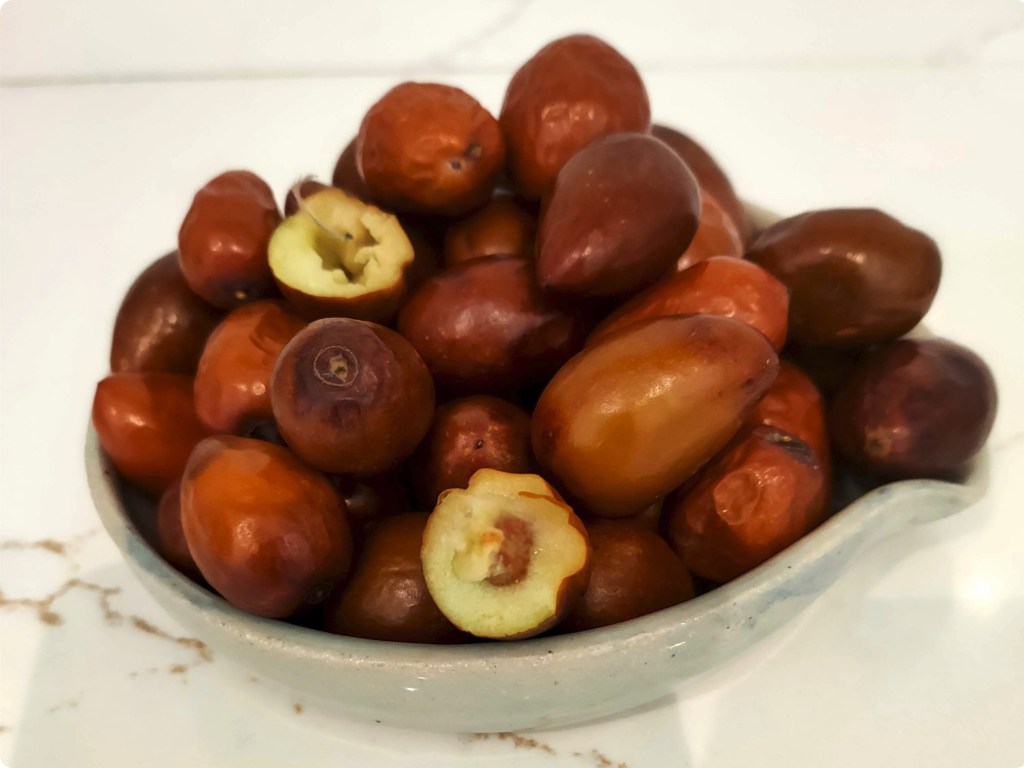
Just last week, I came upon the brown ‘berry’ looking things in the photo above when I was browsing a greengrocers (in Florence – OK, so it was raining – does that make you feel better?). What are they? They look like some sort of small date, or perhaps a nut? They called them ‘giuggiole’, in Italian, or jujube, in English. I tasted one (something Rob says I should not do – but they were for sale, how poisonous could they be?). It had the texture of a tough apple, a slightly sweet taste, and a central stone. Not entirely pleasant but not immediately off-putting in a bad way. I brought some home, stored them in the fridge and that was that.
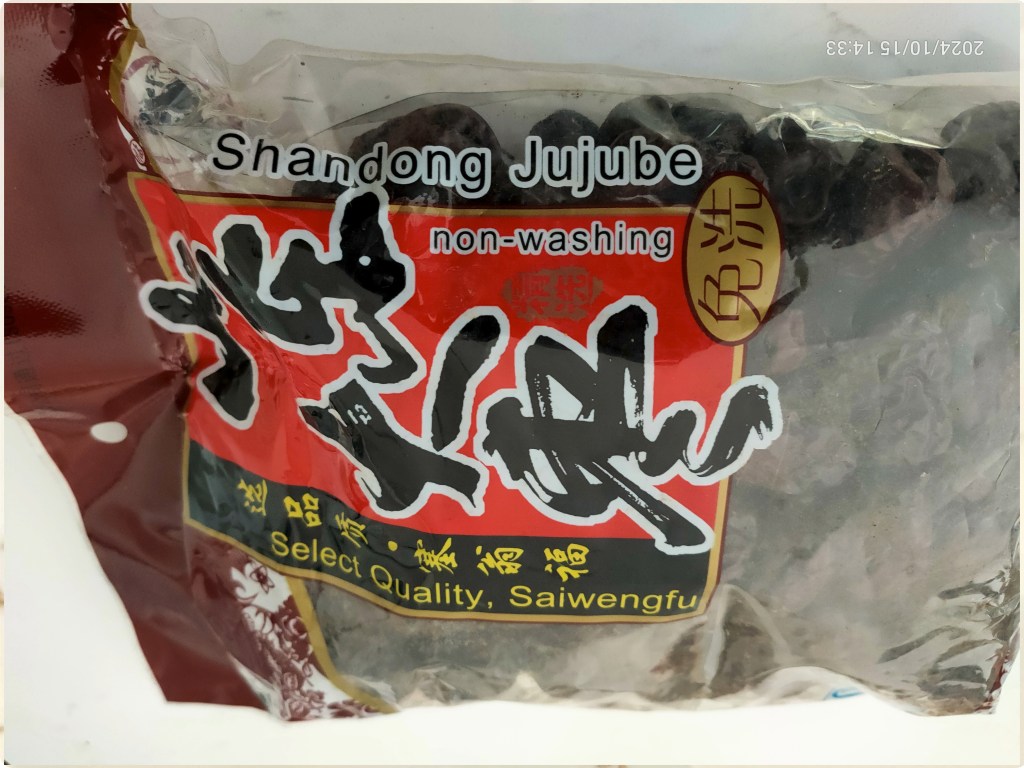
Coincidentally, I came across a packet of Shandong Jujube in my pantry which had been there for ages, perhaps even shipped from New Zealand, just gathering dust, as an ingredient does when you buy on impulse but have no idea what you can or want to do with it (I have a lot of those!). These, being dried, are much less palatable, again with a central stone, dry, papery, but promising a sweetness that could be quite intense.
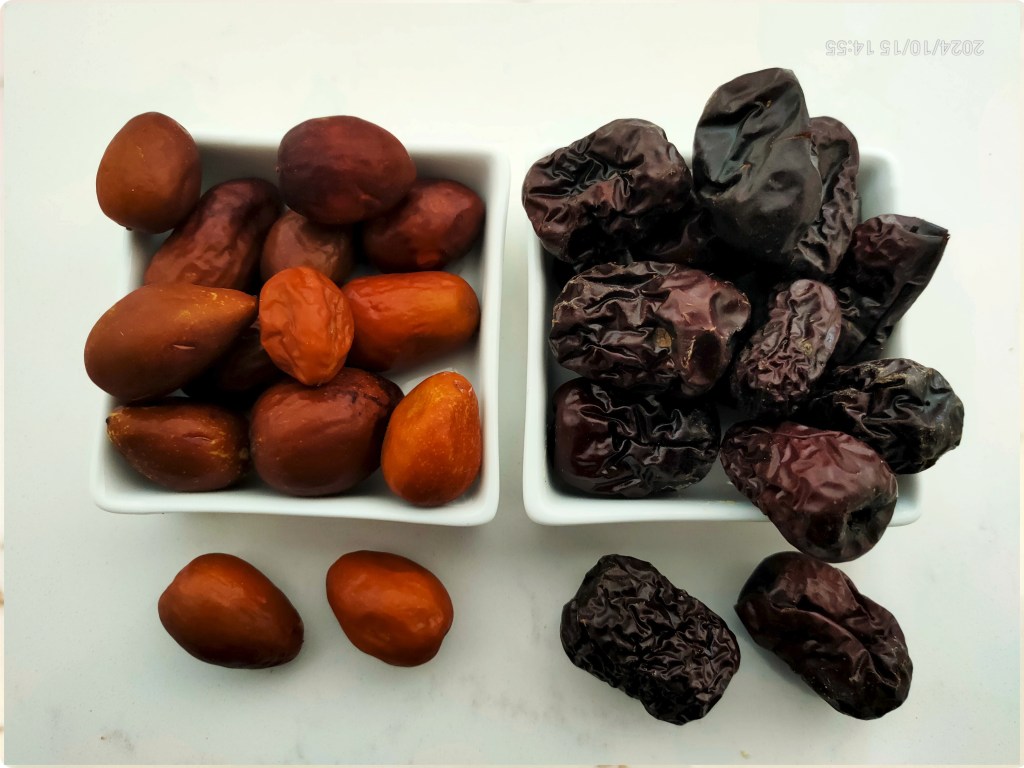
So now I have two types of jujube. Comparing them they seem quite different types of fruit. the Italian one small, compact and light tan. The Chinese one is larger, even when dried, and much darker.
In 1884 an Englishman visitng Florence noted, ‘The children are fond of another wild fruit, called giuggiole (jujube tree). They are glossy brown berries, with a soft, green pulp within.‘ The 19th-century English explorer, Sir Richard Burton, observed that the local variety of jujube fruit was widely eaten. He describes its taste as like “a bad plum, an unripe cherry, and an insipid apple”. A friend, tasting one for me, said it reminded her of a Chinese apple. GrubMarket says they are, ‘Crisp and sweet, they have a texture reminiscent of an apple.’
It seems that these are the same fruit from the same tree from the same genus. The scientific name is Ziziphus jujuba and it is also called red date, Chinese date, and Chinese jujube. Wikipeadia tells us on their excellent and comprehensively informative page that it ‘is a species in the genus Ziziphus in the buckthorn family Rhamnaceae‘. It grows wild but is also a garden shrub, kept for its fruit.The fruit is picked in the autumn. and it has over 400 cultivars and was domesticated in South Asia by 9000 BC. Its precise natural distribution is uncertain due to extensive cultivation. However, its origin is thought to be in southwest Asia, between Lebanon, northern India, and southern and central China, and possibly also southeastern Europe though more likely introduced there. It grows wild but is also a garden shrub, kept for its fruit. Relatively unknown in Britain, the RHS says that the plant is available as a mail order shrub from two suppliers
People have eaten jujube fruit and used it in traditional medicine for thousands of years. High in vitamins and minerals and low in calories, it’s rich in antioxidants and is said to offer many health benefits like better sleep, digestion, and potential immune system support.
For culinary consumption, in Italy, as well as being a treat for children, it is made into an alcoholic syrup called brodo di giuggiole. But this barely touches the many, many ways that jujube has been and is presently used. Other uses are Chinese Jujube tea, any of the 820 recipes on the Cookpad site. I did like the Mochi-Stuffed Jujubes (but I thought getting the osmanthus flowers might be a bit difficult). They can be sliced in autumn salads, added to your breakfast museli or on top of yoghurt. Jujube chips sound good too, just slice them thinly and bake. Just Jujubes has a host of recipes for using fresh jujubes, but I doubt many of us can access these so recipes for dried jujubes might be best. Jujube Date Jam sounds easy and delicious, as does the Dopey Vegan’s Jujube fruit, chickpea and spriced roast vegetable salad.
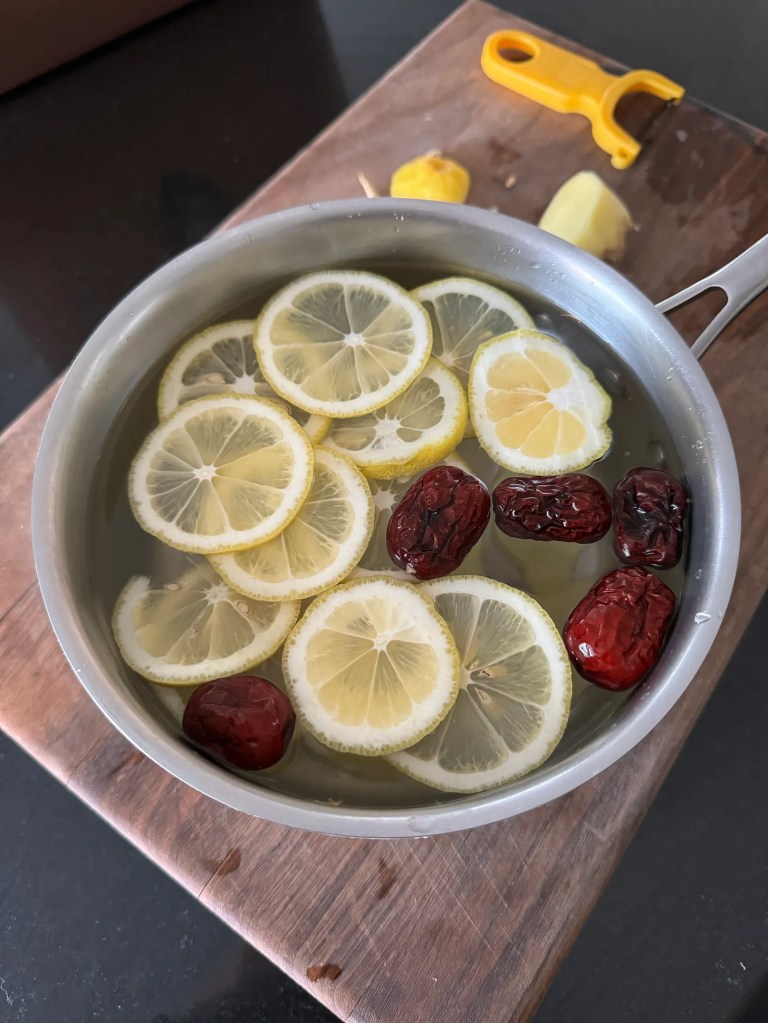
But I chose today to do Christina Chaey’s Lemon, Ginger and Jujube Tea from her site Gentle Foods
 Curious Foodies